Do Data Recovery Services Look at Your Files? Privacy, Ethics, and What Really Happens
The moment of data loss is a uniquely modern panic. Whether it's a failed hard drive containing years of family photos or a corrupted SSD with critical business documents, the feeling is universal: a sinking realization that a piece of your digital life has vanished. In this vulnerable state, you turn to a data recovery service, trusting them with your most sensitive storage device. But as you hand over your hard drive or send off your smartphone, a troubling question often surfaces: Do data recovery services look at your files?
The short, honest answer is yes, technicians often need to see some of your data to verify the success of the recovery, but they operate within a strict framework of ethics, privacy policies, and legal agreements designed to protect your confidentiality. The process is not akin to someone casually browsing your personal photos; it is a technical, methodical procedure with clear boundaries.
This article delves deep into the reality of what happens to your data behind the closed doors of a recovery lab. We will explore the technical reasons why file access is sometimes necessary, the robust privacy measures reputable services employ, the critical distinction between "seeing" and "exploiting" data, and how you, as a customer, can ensure you choose a service that prioritizes your privacy.

The Technical Necessity: Why Technicians Might See Your Data
To understand why complete opacity is impossible during data recovery, it's essential to grasp what the process entails. Data recovery is not simply "undoing" a delete command. It's often a complex forensic operation to reconstruct digital information from damaged media. In this context, a technician's ability to view file structures—and sometimes file contents—is a fundamental part of the job.
1. Verification and Integrity Checking
Once a recovery service has successfully extracted raw data from a damaged device, the job is only half done. They must verify that the recovered files are correct, complete, and functional. Imagine paying for a recovery service only to find that the retrieved documents are corrupted or that the photo folders are empty.
To prevent this, technicians perform sample checks. For instance:
They might open a few recovered images to ensure they render correctly without visual artifacts.
They might attempt to open a document to confirm it isn't corrupted.
They may check database files to see if they can be accessed by their native application.
This verification process is a quality control measure that protects both the customer and the company. It is evidence of a job done thoroughly.
2. File System Reconstruction and Repair
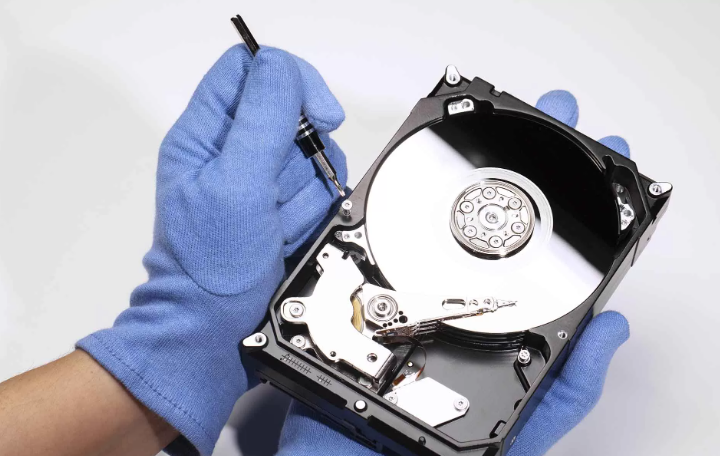
When a drive is formatted, suffers logical corruption, or has a damaged file system, the map that tells the operating system where files are located is lost or damaged. The data itself often remains intact on the platters (for HDDs) or NAND chips (for SSDs). The recovery process involves rebuilding this map.
Technicians use advanced software to scan the raw storage space and identify file signatures—unique patterns of data that define the beginning and end of specific file types (like JPEG, DOCX, or PDF). During this reconstruction, they may need to navigate through directory structures and check file headers to ensure the software is correctly identifying and organizing thousands of files. This process sometimes requires viewing folder trees and file lists that are explicitly named.
3. Targeted Recovery Requests
Customers often request specific files rather than a full-drive image. They might say, "I need the Q4_Financial_Report.xlsx from the Accounting folder and the entire Vacation_2023 photo album." To fulfill such a targeted request, a technician must locate and verify these specific files and directories, which inevitably involves interacting with the file system and its named components.

The Privacy Safeguards: How Reputable Services Protect You
While technical access is a reality, the culture and protocols of a professional data recovery service are built around confidentiality. The casual browsing of personal files is not only unethical but also bad for business. Their reputation depends on being a trusted custodian of sensitive data.
1. Strict Confidentiality Agreements
Before any work begins, a reputable service will have you sign a service agreement. This legally binding document almost always includes a robust confidentiality or non-disclosure clause. This clause legally obligates the company and its employees to protect your data's privacy. Violating this agreement would open them up to significant legal liability and reputational damage.
2. A Culture of Professionalism and Ethics
In a professional data recovery lab, technicians are not curious hobbyists; they are trained experts who view data recovery as a technical challenge, not a source of entertainment. They understand that they are handling sensitive information and are governed by a strict code of ethics. Most technicians have seen thousands of drives and have a professional detachment toward the data they handle. The focus is on the puzzle of recovery, not the content of the files.
3. Data Encryption and Secure Handling
Security-minded recovery services implement stringent protocols for data handling:
Encryption in Transit: Your device is transported using secure, trackable methods, and any data extracted from it is often transferred to a secure server using strong encryption.
Encryption at Rest: The recovered data, while on the service's servers, is stored in an encrypted format.
Secure Facility Access: The physical labs where the recovery occurs are access-controlled, preventing unauthorized personnel from entering.
4. The Principle of Least Privilege
Within the company, access to customer data is typically restricted on a need-to-know basis. Only the technicians directly working on your case will interact with your drive. Administrative staff, salespeople, and other technicians have no reason or permission to access your data.
5. Secure Data Disposal Post-Recovery
A critical part of the privacy promise is what happens after the job is done. Once you have received your recovered data and confirmed your satisfaction, a reputable service will securely wipe all copies of your data from their systems. This is often outlined in their service agreement and should involve methods that meet recognized standards (like NIST 800-88) to ensure the data is irrecoverably destroyed.

The Critical Distinction: "Seeing" vs. "Exploiting" Your Data
This is the core of the issue. There is a world of difference between a technician seeing a file name or a photo thumbnail during verification and a service actively exploiting your data.
"Seeing": A technician, while running verification scripts, sees that
document_final.pdfhas been successfully recovered and opens it to confirm the text is legible. They see thatimage_001.jpgrenders correctly. They do this quickly, methodically, and without emotional investment, then move to the next file. This is a byproduct of a necessary technical process."Exploiting": A technician deliberately searches for and copies personal financial information, intimate photos, or business secrets with the intent to save, share, sell, or blackmail. This is a severe criminal and ethical violation.
The latter is exceptionally rare among established, reputable firms. Their entire business model would collapse overnight if such behavior came to light. The risk/reward calculation for a professional company makes data exploitation an unthinkable act.
How to Choose a Data Recovery Service You Can Trust
Given the need for trust, your choice of provider is paramount. Here is a checklist to help you select a service that will respect your privacy and competently handle your recovery.
Look for Clear Privacy Policies: Before you send anything, read the company's privacy policy and service agreement. It should explicitly state their commitment to confidentiality, outline their data handling procedures, and explain their secure data disposal policy.
Seek Out Certifications and Standards: Reputable services often invest in certifications that demonstrate their commitment to security. Look for mentions of ISO 27001 (information security management) or compliance with other recognized standards. A Class 100 Cleanroom is a must for physical recoveries and indicates a professional operation.
Check Reviews and Reputation: Look for independent reviews on trusted platforms like Trustpilot, the Better Business Bureau (in the U.S.), or Google Reviews. Pay attention to comments specifically about professionalism and trust.
Evaluate Their Communication: A professional service will be transparent about their process and willing to answer your questions about privacy. If they are evasive or make unrealistic guarantees, consider it a red flag.
Ask About Their Data Sanitization Policy: Specifically ask, "What is your process for destroying my data after the recovery is complete?" A trustworthy company will have a clear and confident answer.
Avoid "Too-Good-To-Be-True" Offers: Be wary of services with prices significantly lower than the market average or those that promise a 100% success rate on every job. Quality, security, and expertise have a cost.
Special Considerations for Highly Sensitive Data
If you are dealing with data that is extremely sensitive—such as legal documents, unreleased intellectual property, or personal information of a deeply private nature—you can take extra steps.
Have a Pre-Recovery Conversation: Discuss your confidentiality concerns directly with the service before proceeding. Gauge their response and comfort level with your requirements.
Use Encryption Proactively: The best protection is to have your storage device encrypted before it fails. If your drive is encrypted with BitLocker (Windows), FileVault (Mac), or a similar robust tool, the recovery service cannot access the data without the password or recovery key. You would provide this only for the recovery process, after which you can change it. This is the single most effective way to maintain control.
Consider a Non-Disclosure Agreement (NDA): For corporate clients or individuals with exceptionally sensitive data, you can request they sign a separate, more specific NDA before work begins.
Conclusion: Trust, but Verify
So, do data recovery services look at your files? The technical reality is that they often do, but not in the way a peeping Tom would. It is a controlled, professional, and necessary part of verifying the integrity and success of the data recovery process. The viewing is incidental, not intentional; it is a means to a technical end.
The key is to channel this understanding into action. Do not let the fear of a technician seeing a file prevent you from seeking professional help for critical data loss. Instead, let it motivate you to choose a service with a proven track record, clear privacy policies, and a professional ethos. Your data's privacy is ultimately protected by the integrity of the company you hire, the legal agreements you sign, and the proactive steps you take, such as pre-encryption.
By doing your due diligence, you can confidently partner with a data recovery service, secure in the knowledge that while they may see your data to save it, a professional outfit is committed to never violating it.